Tactile crafting encompasses disciplines like leatherworking and wood carving, emphasizing the direct manipulation of raw natural materials using specialized hand tools. You engage in these crafts to construct durable, physical objects offline, relying entirely on repetitive mechanical actions rather than digital processes.
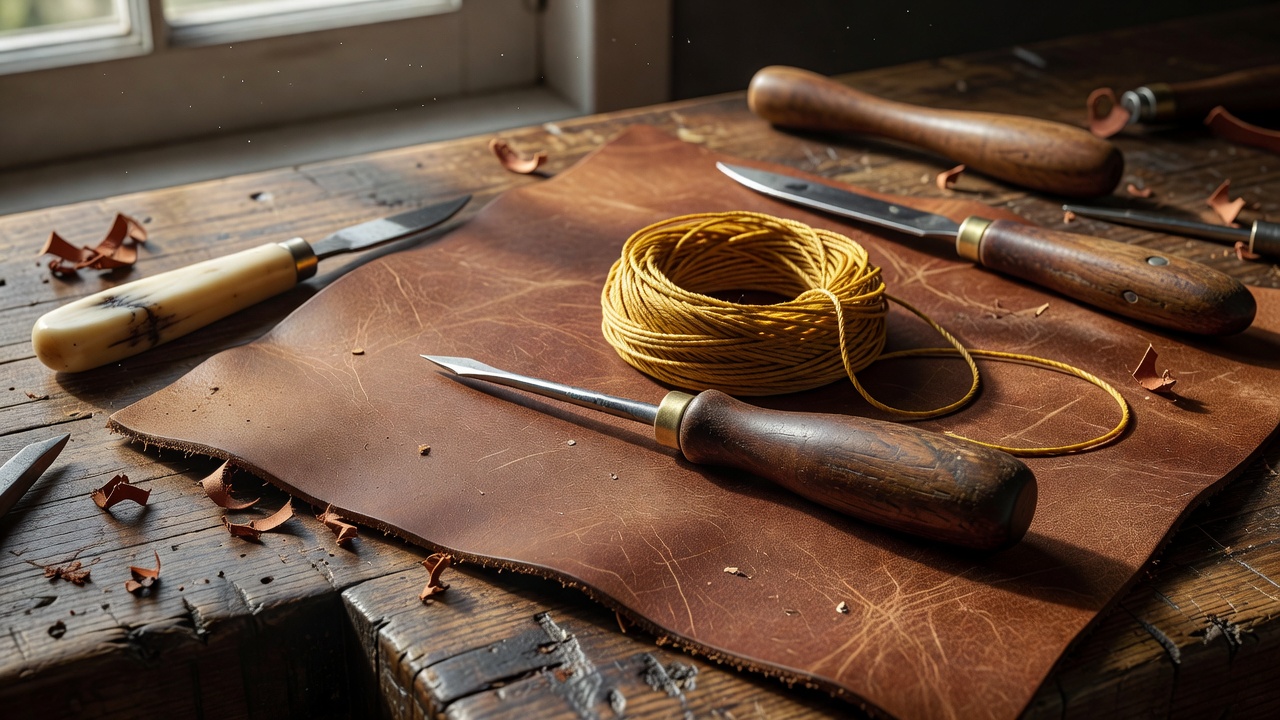
Why choose vegetable-tanned leather over chrome-tanned?
You choose vegetable-tanned leather for handcrafting because it retains structural firmness, absorbs water to allow for tooling and stamping, and allows its raw edges to be friction-burnished to a smooth finish. Chrome-tanned leather, common in mass-produced garments, is chemically processed to be exceptionally soft and pliable, meaning it cannot hold a carved impression and its edges must be painted or folded rather than burnished.
What is the saddle stitching technique?
Saddle stitching is a traditional hand-sewing method where you pass two blunt needles attached to opposite ends of a single waxed thread through the same punched hole from opposite sides. You use this technique because it creates an interlocking figure-eight pattern that will not completely unravel if a single thread breaks, unlike the lock-stitch produced by modern sewing machines.
How do you burnish a leather edge?
You burnish a raw leather edge by applying a small amount of water or a specialized gum tragacanth solution, then rapidly rubbing the edge with a wooden slicker. The intense friction and heat compress the raw leather fibers, melting them together to form a hardened, glassy surface that resists fraying and moisture.
What tools do you need for basic wood carving?
You need a straight-bladed sloyd knife for heavy stock removal and a smaller detail knife with a fine point for intricate cuts. In addition to the knives, you must maintain a leather strop and polishing compound, as frequent stropping is required during a carving session to keep the steel edge perfectly aligned and razor-sharp, preventing dangerous slips.
Which wood is best for a beginner to carve?
You begin carving with basswood because its tight, even grain and relatively soft density make it highly predictable under a knife blade. Unlike pine, which is prone to splintering along prominent grain lines, basswood yields smoothly in multiple directions, allowing you to focus on controlling your cutting angles rather than fighting the resistance of the material.